


If your child’s dentist or Dr. Lindsay Rambo has mentioned a palatal expander, you probably have questions. What does it do? Will it hurt? How long does your child wear it? This guide breaks down what parents need to know, from how the device works to the signs your child might be a good candidate.
What Is a Palatal Expander?
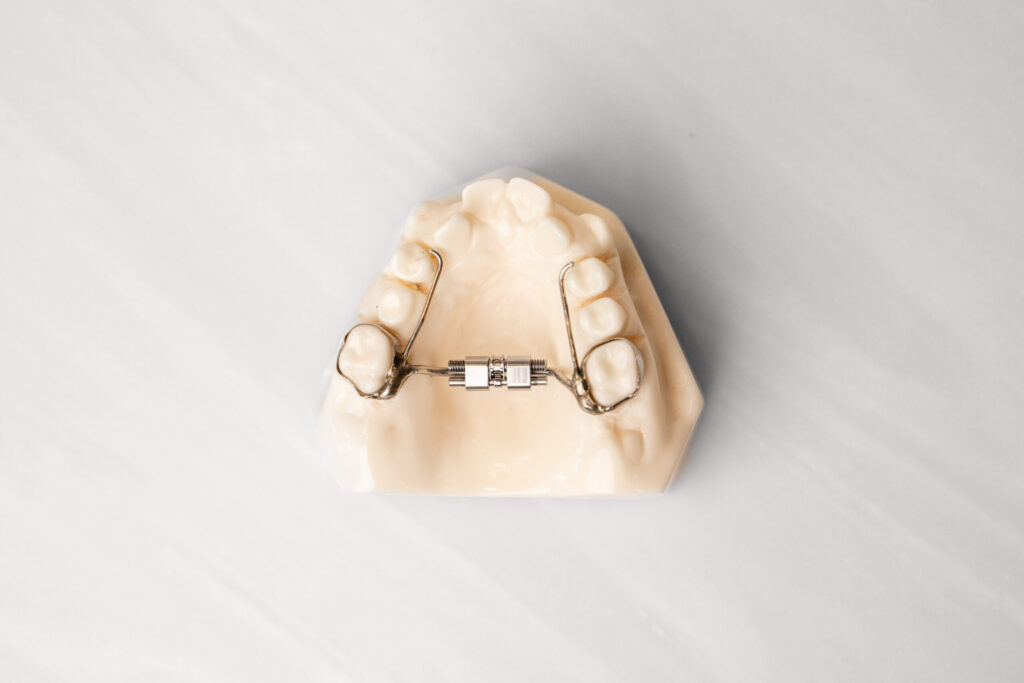
A palatal expander is a small orthodontic appliance that gradually widens a child’s upper jaw. It sits against the roof of the mouth and attaches to the upper back teeth, applying gentle pressure to make room for permanent teeth and correct bite issues. At Rambo Orthodontics, Dr. Rambo often uses expanders as part of Phase 1 early treatment for kids ages 7 to 10.
Here’s what makes an expander different from braces: it moves bone, not just teeth.
Kids have a natural growth line down the middle of their upper jaw called the mid-palatal suture. This suture stays flexible until the early teen years. An expander gently guides the two halves of the palate apart, and new bone fills in the space over time.
Because the suture is still open, treatment is faster, gentler, and more predictable when done during childhood. That’s why timing matters so much with this appliance. Once the suture fuses in the mid-teens, expansion becomes much harder without surgical help.
How a Palatal Expander Works
A palatal expander uses steady, gentle pressure to widen the upper jaw over several weeks. A parent turns a small key in the center of the device as Dr. Rambo prescribes, usually once a day, which activates a tiny screw. That screw slowly separates the two halves of the palate, and your child’s body responds by filling the gap with new bone.
Here’s what the process looks like step by step:
- Fitting the expander. Dr. Rambo custom-fits the appliance to your child’s upper teeth. It’s cemented in place and stays put throughout treatment.
- Daily activation. You’ll turn the key once a day (sometimes more or less, depending on Dr. Rambo’s instructions). Each turn moves the palate a fraction of a millimeter.
- Active expansion phase. This part typically lasts 2 to 6 weeks. You may notice a small gap forming between your child’s two front teeth. That’s a good sign, it means the expander is doing its job.
- Stabilization phase. Once the palate reaches the target width, the expander stays in place for another 4-6 months. This gives new bone time to form and set.
- Removal. After stabilization, Dr. Rambo removes the appliance during a quick visit.
The temporary gap between the front teeth usually closes on its own as the surrounding teeth shift into their new positions. Some kids feel mild pressure right after each turn, but it fades within minutes.

Benefits of Palatal Expansion for Children
Palate expansion does more than make room for teeth. It sets the stage for healthier jaw growth, better breathing, and simpler orthodontic care later on. Here’s what parents can expect:
- Corrects crossbite early. When upper teeth bite inside the lower teeth, it can throw off jaw growth and cause uneven wear. Fixing it during childhood prevents bigger issues down the road.
- Creates space for crowded teeth. Widening the arch gives permanent teeth room to erupt in their proper spots. This often means fewer crooked teeth and impacted canines later.
- May reduce the need for extractions or jaw surgery. By guiding growth early, expansion can prevent the kind of severe crowding or skeletal issues that require pulling teeth or surgical correction as a teen or adult.
- Improves nasal airflow. A wider palate means a wider nasal floor, which can help kids who struggle with mouth breathing or snoring.
- Supports symmetric jaw development. Balanced growth on both sides of the face contributes to better facial proportions and a more even bite.
- Simplifies future treatment. Kids who have Phase 1 expansion often need shorter or less involved braces or clear aligners as teens.
Dr. Rambo takes an honest, conservative approach with every family. She won’t recommend an expander unless it’s truly the right call for your child, the same standard she’d hold for her own kids. That kind of trust is a big reason families across Lansdale and Souderton feel at home at Rambo Orthodontics.
Types of Palatal Expanders: Comparison
Not every expander looks the same, and Dr. Rambo will recommend the type that fits your child’s age, skeletal maturity, and specific bite needs. Here’s how the main options compare:
| Type | Best For | How It Works |
| Rapid Palatal Expander (RPE) | Kids ages 7-14 with narrow upper jaws or crossbite | Cemented to back molars; daily key turns expand the palate quickly |
| Implant-Supported Expander | Young adults with partially fused sutures | Uses mini-implants to anchor into the palate, bypassing the teeth |
| Surgically-Assisted (SARPE) | Adults with fully fused mid-palatal sutures | A minor oral surgery loosens the suture, then an expander widens the jaw |
The Rapid Palatal Expander is by far the most common choice for kids because their sutures are still open and responsive. Implant-supported and surgical options come into play only when a patient has outgrown the window for standard childhood expansion.
During your free consultation, Dr. Rambo will explain which type fits your child and why.
Palatal Expander Cost Factors
The cost of a palate expander varies depending on several factors, including the type of appliance, whether it’s part of Phase 1 or a fuller treatment plan, and your insurance coverage. Rambo Orthodontics offers a free consultation so you can get a clear, personalized estimate before making any decisions.
Here’s what typically affects the price:
- Type of expander. Fixed rapid expanders and implant-supported devices all have different costs.
- Treatment scope. An expander used alone in Phase 1 is usually priced differently than one bundled with future braces or clear aligners.
- Length of active expansion and follow-up. More visits and longer stabilization periods can influence the total.
- Insurance and HSA/FSA eligibility. Many orthodontic plans cover a portion of Phase 1 treatment. HSA and FSA funds usually apply too.
- In-house payment plans. Rambo Orthodontics offers budget-friendly financing so families can spread the cost over time.
You shouldn’t have to choose between great care and care that fits your budget. Dr. Rambo and the team will walk you through every option during your free consult.
Signs Your Child May Need a Palatal Expander
Not every child needs an expander, but certain signs are worth paying attention to. The American Association of Orthodontists recommends a first orthodontic evaluation by age 7, which is when Dr. Rambo can catch these issues early and decide whether treatment is needed now or later.
Watch for these signs:
- Crossbite. Upper teeth bite inside the lower teeth on one or both sides.
- Crowded, crooked, or impacted permanent teeth. New teeth come in twisted, stuck, or with no room to fit.
- Narrow or V-shaped upper arch. The roof of the mouth looks pointed or unusually tight.
- Mouth breathing or snoring. Restricted nasal airflow can be linked to a narrow upper jaw.
- Difficulty chewing or a shifting jaw. Your child may naturally slide their jaw to one side when biting down.
- Dentist referral. Your family dentist has flagged a bite or palate concern.
If any of these sound familiar, a free consultation with Dr. Rambo is a good next step. Early evaluation doesn’t always mean early treatment, but it does mean peace of mind.
Frequently Asked Questions
Do kids really need palate expanders?
Not every child needs one, but for kids with crossbite, severe crowding, or a narrow upper jaw, an expander can prevent bigger issues later. Dr. Rambo takes a conservative approach and only recommends an expander when the benefits clearly outweigh waiting. A free consult is the best way to find out if your child is a candidate.
What are the downsides of a palate expander?
Most kids adjust quickly and are back to normal in no time, but there are a few minor things to expect at first. Your child may feel mild pressure after key turns, notice extra saliva at first, or have slightly altered speech for a few days. A temporary gap between the front teeth is normal and usually closes on its own. Serious complications are rare.
What is the best age to get a palate expander?
The ideal window is typically ages 7 to 10, while the mid-palatal suture is still flexible. The American Association of Orthodontists recommends a first orthodontic evaluation by age 7, which lets Dr. Rambo identify the right timing for your child. Waiting too long can make expansion more involved.
Does a palate expander hurt?
No, most kids don’t describe it that way. There’s usually a feeling of pressure right after each key turn that fades within a few minutes. Some children mention tightness across the bridge of the nose or between the front teeth. Any soreness typically eases within the first few days of wear.
How long does my child wear the expander?
Active expansion, the key-turning phase, usually lasts 2 to 6 weeks, followed by a stabilization phase of 4 to 6 months. Total wear time is often around 6 to 9 months, though Dr. Rambo will give you a specific timeline based on your child’s needs. The device stays in the entire time, working quietly in the background as new bone forms and hardens.
Can my child eat and speak normally with an expander?
Yes, with a short adjustment period. Speech may sound a little different for the first few days as the tongue gets used to the device. Eating is usually fine, though sticky and hard foods should be avoided to protect the appliance. Most kids are back to normal within a week. During your child’s appointment at Rambo Orthodontics, we’ll take the time to go over tips and tricks for those first few days, helping make the adjustment smooth and easy for both you and your child.
Wondering if your child needs a palate expander? Dr. Lindsay Rambo and the team at Rambo Orthodontics offer free consultations for families across Lansdale, Souderton, and the surrounding areas. We’ll take the time to explain your options, answer your questions, and help you feel confident about the next step. Schedule your free consult today.
Welcome to the RO family!
