


Thinking about clear aligners for adults? You’re in good company. More grown-ups than ever are choosing clear aligners to shift their smile without the look of metal braces. It’s a discreet option that fits into busy work schedules, weekend plans, and everything in between. At Rambo Orthodontics in Lansdale and Souderton, PA, we see adults every week who want a straighter smile without the look of traditional braces.
Before you start, though, it helps to know what you’re signing up for. This guide walks through how clear aligners work, who they’re right for, what treatment costs, how long it takes, and what to ask at your consultation. Dr. Lindsay Rambo, orthodontist, and our team put this together to help you feel prepared, not overwhelmed.
A supervised in-office evaluation is the best first step. Every smile is different, and a real exam beats guesswork every time.

What Are Clear Aligners and How Do They Work?
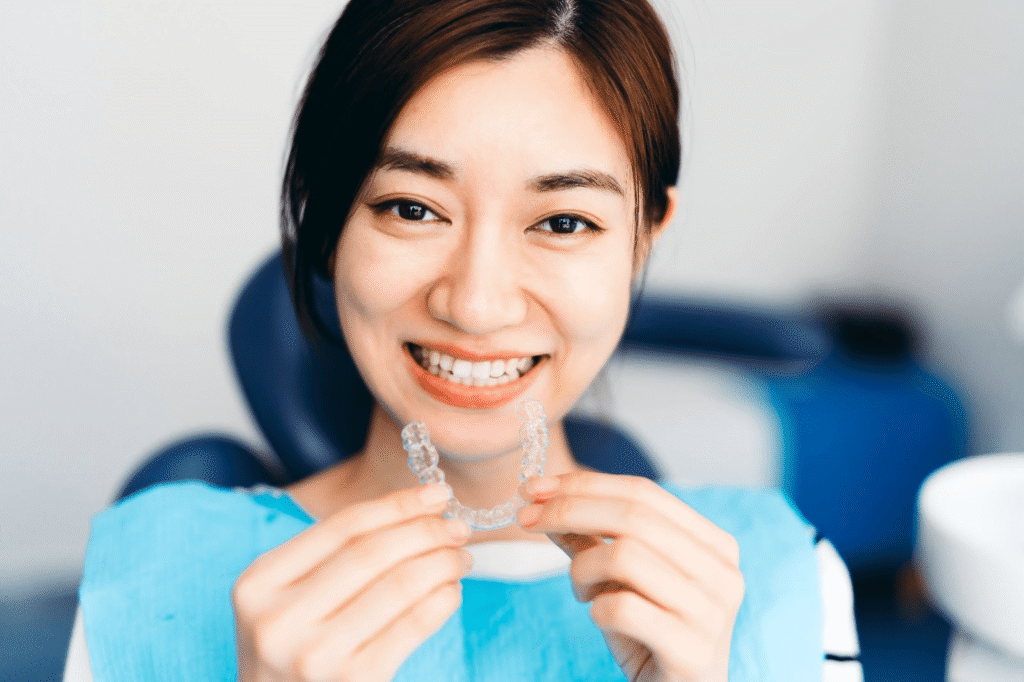
Clear aligners are a series of custom-made, BPA-free plastic trays that gently move your teeth into place. You wear each tray 20 to 22 hours a day and switch to the next one every one to two weeks. Over time, small, planned movements add up to a straighter smile.
Here’s the short version of how it comes together:
- Digital scan. A quick, no-goop 3D scan captures your teeth.
- Custom plan. Dr. Rambo maps out each tooth movement from start to finish.
- Attachments. Small tooth-colored bumps may be added to help trays grip and guide certain teeth.
- IPR (interproximal reduction). Sometimes a tiny amount of enamel is polished between teeth to create room.
- Progress. You swap trays on schedule, and your smile shifts step by step.
It’s precise, predictable, and designed around your bite, not a template.
Are You a Good Candidate for Clear Aligners as an Adult?
Clear aligners handle a wide range of adult cases. They shine for mild to moderate crowding, spacing, and many everyday bite concerns. If your teeth have shifted since childhood or an old retainer stopped fitting, aligners can often bring things back into line.
Good candidates usually have:
- Healthy gums and no active cavities
- Mild to moderate crowding or gaps
- A willingness to wear trays 20 to 22 hours a day
- Realistic expectations about timing and results
Some cases call for metal braces or clear braces instead, especially when there are significant bite corrections, complex rotations, or teeth that need major vertical movement. Existing crowns, veneers, bridges, or implants don’t automatically rule aligners out, but they do affect planning. Attachments may not bond to porcelain the same way, so Dr. Rambo will factor that in.
The best way to know for sure? Come in for a consultation. A quick exam and scan give you real answers, not internet guesses.
Clear Aligners vs. Metal Braces: Key Differences
Both options straighten teeth well. The right choice depends on your case, your lifestyle, and what feels like a better fit for you.
| Feature | Clear Aligners | Metal Braces |
|---|---|---|
| Appearance | Nearly invisible | Visible brackets and wires |
| Removability | Take out to eat and brush | Fixed to teeth |
| Comfort | Smooth plastic, no wires | May irritate cheeks at first |
| Best for | Mild to moderate cases | Complex bite and rotation cases |
| Typical timeline | 6 to 18 months for many adults | 12 to 24 months on average |
| Office visits | Every 6 to 10 weeks | Every 4 to 8 weeks |
| Daily care | Clean trays, brush before reinserting | Careful brushing around brackets |
Cost varies with case complexity for both. Dr. Rambo will walk through the pros of each so you can decide with real information in hand.
What to Expect During Treatment
Knowing the flow of treatment takes a lot of the mystery out of it. Here’s how it usually goes:
- Consultation and exam. We look at your teeth, listen to your goals, and answer your questions.
- Digital scan. A fast, easy scan replaces old-school impressions.
- Custom plan preview. You see a digital preview of how your smile will change.
- First trays. Expect one to three days of gentle pressure as teeth start moving. It’s a good sign things are working.
- Check-ins every 6 to 10 weeks. We track progress, hand out new trays, and adjust as needed.
- Refinements. Many cases include a short set of extra trays at the end to fine-tune the final result. It’s normal and part of the plan.
- Retainers. Once teeth are in place, retainers keep them there.
Speech usually adjusts within a few days. Eating is simple: pop the trays out, enjoy your meal, brush, and pop them back in.
How Much Do Clear Aligners Cost for Adults?
Adult clear aligner treatment commonly ranges from about $3,000 to $8,000 [STAT_NEEDED]. Where your case lands depends on several things:
- Case complexity. More movement usually means more trays.
- Treatment length. Longer plans generally cost more.
- Provider experience. Supervised care with an orthodontist adds value you can see and feel.
Many dental insurance plans include an orthodontic benefit that can help lower the cost. HSA and FSA funds usually apply too. At our Lansdale and Souderton offices, we offer flexible monthly payment plans that split treatment into manageable amounts.
A quick note: the lowest price isn’t always the best value. Supervised care, accurate planning, and post-treatment support all matter for results that hold up over time.
In-Office Supervised Treatment vs. Mail-Order Aligners
Mail-order aligners look tempting because they skip the office. That’s also the problem. Without an in-person exam, X-rays, and hands-on monitoring, small issues can turn into bigger ones.
Here’s what supervised care at our Lansdale and Souderton practice adds:
- A real exam to catch cavities, gum concerns, or bite issues before treatment
- Attachments and IPR when your case needs them
- Progress checks that can adjust the plan mid-treatment
- Someone to call if a tray cracks, feels off, or gets lost
- Retainers and follow-up care after treatment ends
With Dr. Rambo, you’re not on your own between trays. You’ve got a team watching your progress between visits.
Caring for Your Aligners and Your Smile
Good habits protect your trays and your teeth. A few simple routines go a long way:
- Clean trays daily. Rinse and gently brush with a soft toothbrush and clear soap. Skip hot water and colored toothpaste.
- Brush and floss before reinserting. Food left behind means bacteria left behind.
- Only drink water with trays in. Coffee, tea, wine, and soda can stain trays and irritate teeth.
- Handle them at work and out to eat. Keep a small case in your bag. Never wrap them in a napkin.
- Store safely. Lost trays slow progress and cost extra.
Traveling? Pack your current tray, the next one, and your case. Simple prep saves headaches.
Life After Aligners: Retention and Long-Term Results
Straight teeth want to shift back. That’s just biology. Retainers are what keep your new smile in place, and they’re a non-negotiable part of finishing strong.
Most adults wear retainers full-time for a short period after active treatment, then move to nighttime wear long-term. You’ll have options:
- Removable retainers. Clear and easy to wear at night.
- Fixed retainers. A thin wire bonded behind the front teeth for extra security.
At Rambo Orthodontics, retainer checkups are part of your care so we can make sure everything’s holding steady. Replace worn retainers when they no longer fit snugly, and you’ll keep your results steady for years.
Questions to Ask at Your Consultation
Bring this list to your visit. It’ll help you get clear, useful answers:
- Am I a candidate for clear aligners, and what results can I realistically expect?
- How long will my treatment take, and roughly how many trays?
- Will I need attachments or IPR?
- What’s the total cost, and what payment options are available?
- What happens if I need refinements or a replacement tray?
- How often will I come in for check-ins?
- What does retention look like after treatment?
Good questions lead to good decisions. Don’t hold back.
Frequently Asked Questions
Do clear aligners hurt?
Most people experience mild pressure for one to three days after switching to a new tray, which is a normal sign the aligners are working. Over-the-counter comfort options and switching trays at bedtime can help ease it. Sharp discomfort isn’t normal, so let our team know if something feels off.
Can I get aligners if I have crowns or veneers?
Yes, in many cases. Crowns, veneers, and implants don’t automatically disqualify you from clear aligners. Attachments may bond differently to porcelain, so Dr. Rambo will factor that into your custom plan during your consultation.
How long do clear aligners take for adults?
Many adult cases finish in about 6 to 18 months. Simpler cases go faster, while more involved bite corrections take longer. Consistent wear of 20 to 22 hours a day is the biggest factor in staying on schedule.
Will aligners affect my speech?
Not everyone is affected, but it’s normal to have a slight lisp for the first few days as your tongue adjusts. Most people speak normally within a week. Reading out loud or talking through your day at home can speed up the transition.
Are clear aligners covered by insurance?
Many dental plans include orthodontic benefits that apply to clear aligners, though coverage varies. HSA and FSA funds usually work too. Our team will help you check your benefits and set up a flexible monthly payment plan that fits.

Ready to Explore Clear Aligners? Schedule a Consultation
A personalized, in-office evaluation is the best way to see if clear aligners are right for you. You’ll get real answers, a good look at your options, and a clear next step, all from Dr. Lindsay Rambo and our team.
Bring your questions. Bring the checklist above. We’ll take care of the rest.
Rambo Orthodontics welcomes new patients in Lansdale and Souderton, PA. Reach out to book your consultation and see what’s possible for your smile.
